China’s National Forestry and Grassland Administration, the National Development and Reform Commission, and the National Energy Administration jointly released the “Three-North Desert, Gobi and Sandy Area PV-for-Desert-Control Plan (2025–2030)”. The plan sets an ambitious target: by 2030, the “Three-North” region will add 253 GW of new PV capacity and restore 10.1 million mu of desertified land. This milestone marks PV’s transformation from a supplementary energy source to a central pillar of China’s energy system—situated at the intersection of ecological restoration and clean power generation.
But enabling PV systems to truly take root and perform reliably in deserts is no easy feat. Extreme temperature fluctuations, intense UV radiation, pervasive sandstorms, high-temperature degradation, and hotspot risks are all critical challenges that modules must withstand. Only products that have passed rigorous certifications and authoritative tests can operate stably in these environments. HT Series modules delivers precisely such reliability—offering a proven, high-quality answer to the “desert exam.”
Thermal Shock — Stability Like Stone
Desert regions experience sharp day-night temperature swings. Scorching daytime heat followed by rapid nighttime cooling repeatedly subjects modules to thermo-mechanical stress, raising risks of metallization fatigue and interconnect failure, which can shorten module lifetime and compromise energy yield.
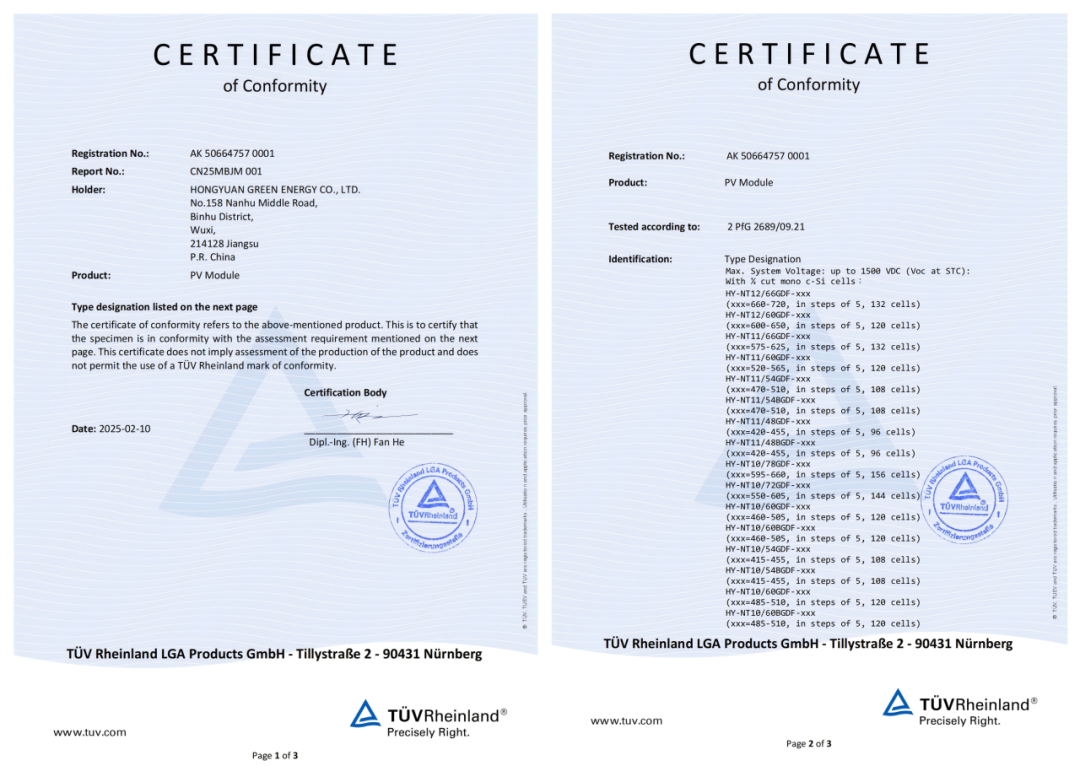
HY SOLAR’s HT Series has passed IEC thermal cycling and LETID tests. Even after extreme high-low temperature cycling and prolonged high-temperature, high-irradiance exposure, the modules maintain stable performance with degradation far lower than IEC limits.
This durability is driven by optimized cell processes, improved encapsulation materials, and a lower temperature coefficient—allowing HT Series modules to operate more stably in desert climates and ensure long-term reliability across their entire service life.
Sandstorm Resistance — Power That Stays Strong
In desert environments, relentless sandstorms erode module surfaces and may penetrate seals, threatening electrical safety and long-term performance, eventually reducing power output.
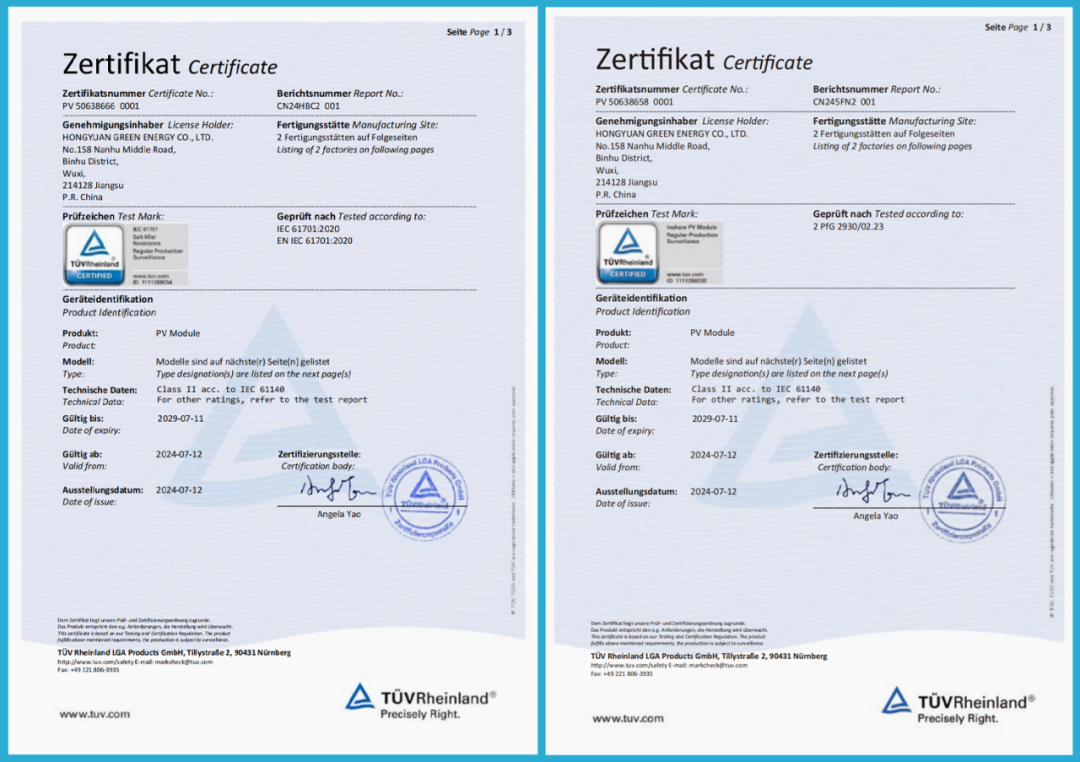
HT Series modules successfully passed the IEC 60068 sand and dust resistance test. In simulated severe sandstorms, the modules demonstrated excellent optical stability, strong electrical insulation, and robust structural sealing—showcasing outstanding sand-resistance capability.
This standard also serves as an important reference for PV plant siting and engineering design in wind-sand–prone regions.
Shading & Hotspot Risks — Designed for Safety
High dust accumulation is common in desert PV plants. If parts of a module remain shaded for extended periods, hotspots can form, accelerating aging and increasing safety risks.
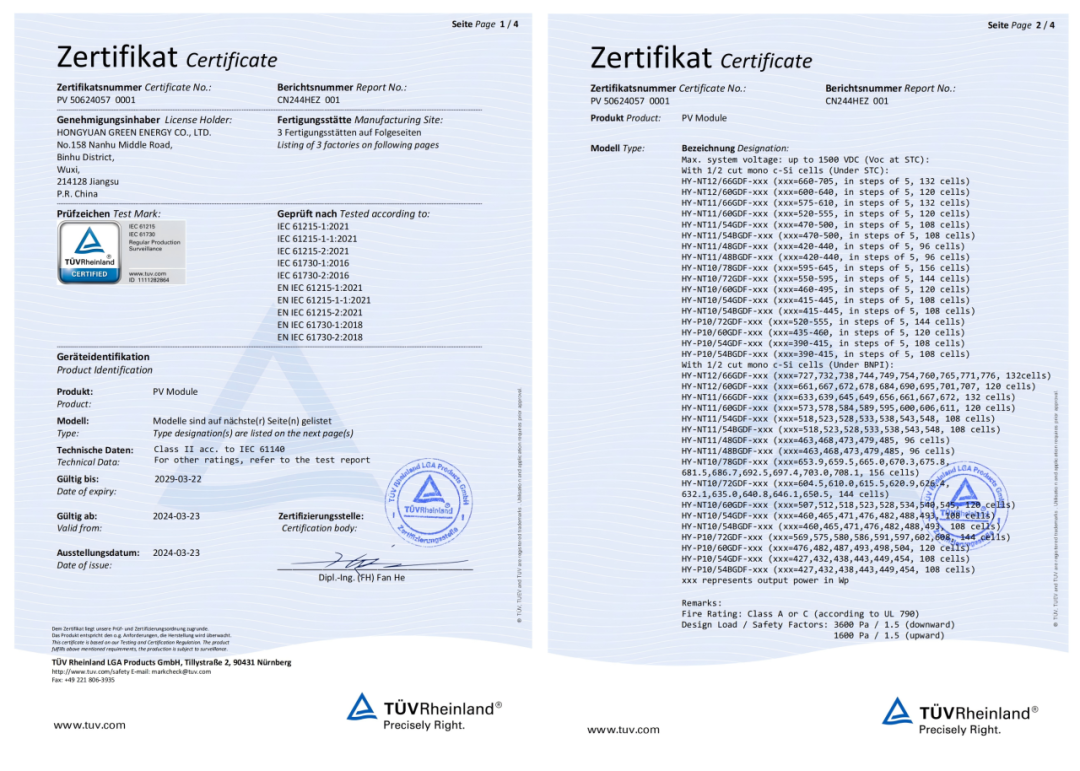
To address this, HT Series modules adopt SMBB with half-cut cell technology, reducing main-busbar current, lowering thermal stress, and significantly mitigating hotspot formation. The modules have also passed IEC hotspot endurance testing, proving their resistance to hotspot effects and reducing fire risks.
Additionally, HY SOLAR offers anti-dust frame designs to reduce surface dust buildup and improve energy yield.Together, optimized design and advanced processes ensure high output, safe operation, and robust long-term stability.
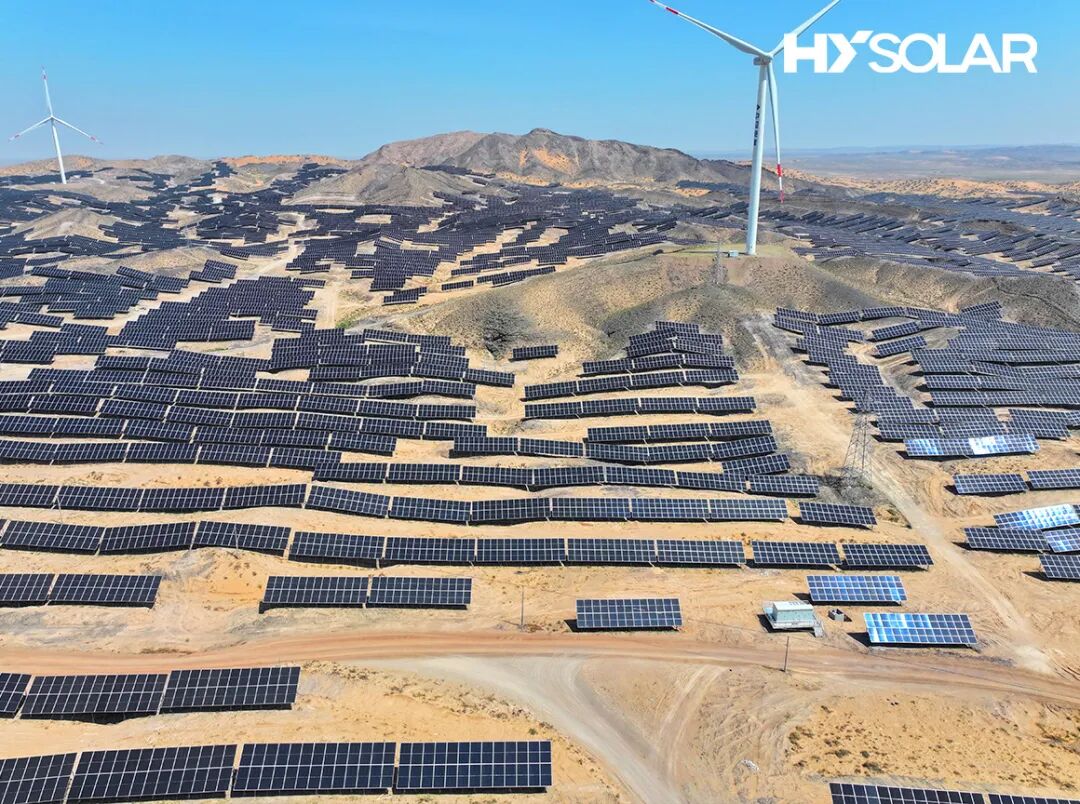
Beyond laboratory validation, the HT Series has been tested in real desert conditions.In Ningxia Zhongwei, HY SOLAR supplied 508 MW of high-efficiency modules on the eastern edge of the Tengger Desert—where PV arrays and desert vegetation form an iconic ecological-restoration landscape.In the Ulan Buh Desert in Inner Mongolia, a 509 MW project deployed HT Series bificial modules to deliver both sand-control benefits and clean power, injecting continuous renewable energy into the “sea of sand.”
PV-driven desert control is more than transforming barren land—it represents a new direction for the global energy transition.From deserts to diverse global environments, from certification labs to real-world mega-projects, the HY SOLAR HT Series—backed by rigorous testing and proven durability—helps turn deserts green and contributes lasting momentum to a zero-carbon future.

COPYRIGHT © HY SOLAR Co., Ltd. ALL RIGHTS RESERVED 苏ICP备05006512号 苏公网安备 32021102000184号